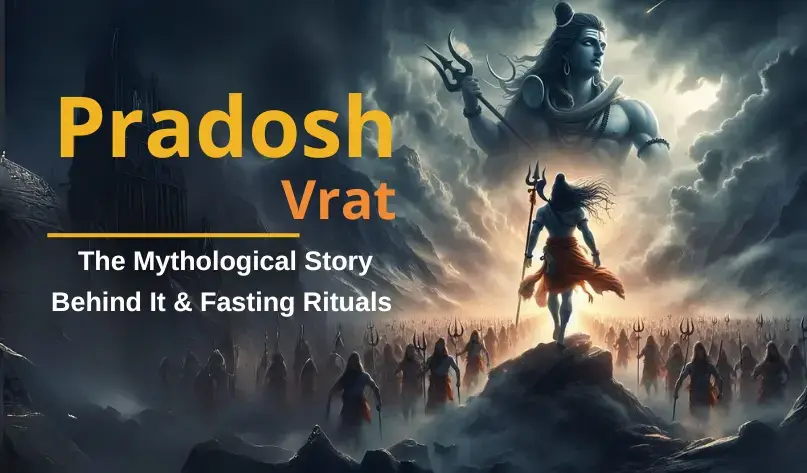
Pradosh Vrat: The Mythological Story Behind It & Fasting Rituals
The Lord Shiva devotees might be oriented with प्रदोष व्रत or why fast is kept this day. For those who do not have any knowledge or have heard about this fast the first time, we will tell them about this particular tradition.So, let’s dive in:
प्रदोष means the 13th day of the lunar fortnight (both waxing शुक्ल पक्ष and the waning phases कृष्ण पक्ष), which holds special importance in fasting for Lord Shiva. The fast is kept twice a month on the 13th day, which is called त्रयोदशी, which means two opportunities for the devotees of Shiv ji to connect with the divine wholeheartedly.
If we talk about keeping fast today, this does not necessarily mean that people have to abstain from food. But it includes everything from chanting Shiva’s sacred mantras to worshipping him, offering prayers, lighting candles, and also eating सात्विक food.
The Mythological Story Behind प्रदोष व्रत
All people would be curious to know the story or mythological significance behind why the Pradosh Vrat is observed. To know about it, let’s get back to the epic moment of the ancient texts, which describe the story as under:
The समुद्र मंथन Moment
The Pradosh Vrat has its deep significance related to “Churning of the Ocean,” which means समुद्र मंथन. Various gods and demons united in churning the ocean of milk known as क्षीर सागर in search of the elixir of immortality. For this, they used Mount Meru as the churning god and the serpent Vasuki as a rope to churn the ocean. But this task was full of hurdles, limitless trials, and uncertainties.
In this process, various precious items emerged from the ocean, like कामधेनु, which is called the wish-fulfilling cow, उच्छैश्रवा known as the seven-headed divine horse, and also the goddess लक्ष्मी herself. However, the most desirable item was hidden deep within.
After some time, it is said that during the churning of the ocean, a deadly poison emerged from the ocean, called ‘Halahal’. The poison was so harmful that it threatened to destroy the whole universe. The gods or the demons got worried about the poison’s effect and reached out to Lord Shiva for help.
Lord Shiva consumed Halahal to save the world. That is why the deity is always associated with the blue throat because he is carrying the dreadful poison in his throat to save the universe. Lord Shiva swallowed the whole poison and saved the world. His act of selflessness symbolizes that He is the supreme God who sacrificed this much for the benefit of all.
However, during the event, Lord Vishnu appeared in the avatar of Mohini to distribute the Amrit among all gods, which they will drink and become immortal.
Now you might be wondering about how Pradosh Vrat can be related to the Samudra Manthan story; it can be seen in this way:
How is the Pradosh Vrat or Samudra Manthan Event Connected with Lord Shiva?
- During the Samudra Manthan event, gods and asuras gathered to save the universe. So, the devotees of Lord Shiva observe the Pradosh Vrat to receive the divine protection and mercy of Lord Shiva and to shower his blessings on their lives.
- The churning of the ocean happened at twilight time, which is known as Pradosh Time, the time when Lord Shiva’s energy is considered at its peak. So, whoever fasts this time can benefit significantly from Shiva Ji’s grace.
- Pradosh time is the symbolic time of a battle between good and evil and it showcases how Shiva ji maintained balance and produced good for others. So, this time also reflects the cosmic power of the universe when the whole universe was saved from the deadly poison with Shiva Ji’s cosmic power.
- People also believe that observing Pradosh Vrat will help them become closer to spiritual nectar, just like the gods who were in search of Amrit to become immoral. The devotees feel that observing this fast will help them attain Moksha and detachment from worldly desires.
Which Rituals Are Performed Observing This Sacred Vrat?
- Fasting is done from sunrise till the evening. Some people chose to fast completely while others observed the partial fast. It is as per personal preferences and health.
- People also wear Rudraksha Kanthi Mala observing this fast for inner soul cleansing and balancing their chakras.
- As the Pradosh time appears, which is called Twilight, puja is started, which is followed by lighting up diyas and offering fruits, flowers, and Bel leaves to Lord Shiva. बेल पत्र are precious to Lord Shiva, so make sure to offer them to him while worshipping him.
- Chant different mantras related to Shiv Ji, like the Maha Mritunjaya Mantra, Om Namah Shivaya ॐ नमः शिवाय, and more, for attaining Lord Shiva Ji’s blessings.
- After this, Shiva Aarti is performed during the evening, which is the beautiful melodic chant or prayer sung in praise of Lord Shiva. It’s due to these vibrations that devotees feel close to Shiv Ji.
- During the pooja, the devotees contemplate fast-consuming light meals, eating fruits or simple food. Also, special offerings are made to Shiv ji, like coconut, milk, and honey as sacred offerings.
Concluding Thoughts
So, that’s it about it. Whether you are keeping this vrat for inner peace or serenity or for honoring the story behind it. The fast is going to bless you with immense happiness and graceful treasures.
To practice it perfectly, wear simple attire, eat Satvik food, and also keep your bhakti intentions strong, for this can only help to feel Shiva’s energy near you and inside you.